

Introduction
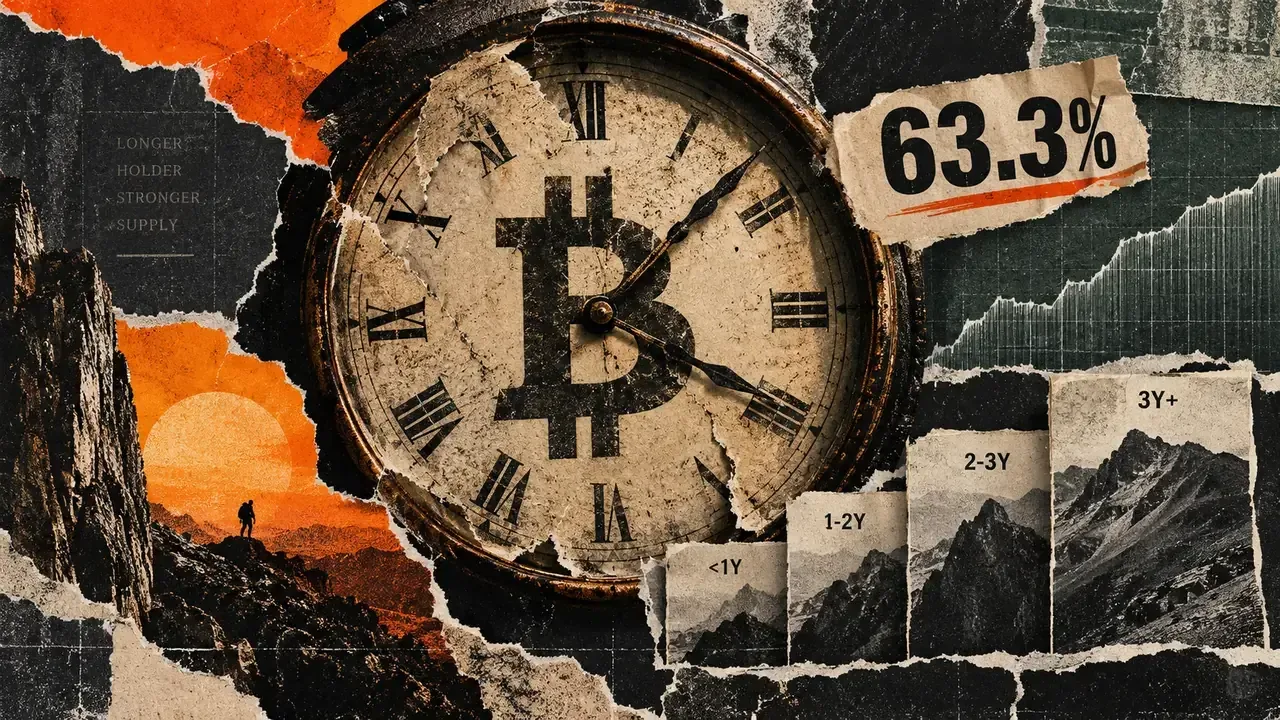
Bitcoin's one‑year holder share recently climbed to 63%, a 0.98 percentage‑point increase over the past month. While the headline figure has been touted as a harbinger of a new bull market, a closer look at the underlying age‑band dynamics reveals a more nuanced picture.
Key Takeaways
- The one‑year cohort grew by 0.98% while neighboring age bands shifted around the 12‑month threshold.
- Much of the increase stems from coins aging into the one‑year bucket rather than fresh accumulation.
- On‑chain data shows no corresponding surge in new wallet creation or exchange outflows.
- Historical precedent suggests similar HODL‑wave spikes have preceded both rallies and prolonged consolidations.
Market Impact Analysis
Because the metric reflects supply redistribution rather than incremental demand, its immediate price impact is likely muted. Short‑term traders should not interpret the 63% level as a standalone buy signal. However, the growing proportion of long‑term holders does reinforce Bitcoin's store‑of‑value narrative, which can support prices over longer horizons.
Outlook
If the current aging trend continues without a parallel influx of new capital, the HODL wave may plateau, limiting its predictive power. A genuine bullish catalyst would require a simultaneous rise in on‑chain activity, institutional inflows, and a break of key resistance levels. Until then, the market remains in a wait‑and‑see mode, with the 63% figure serving as a background condition rather than a decisive trigger.
Market context
Market data reflects conditions at publication time and is not updated in real time.
Data captured at: Sep 20, 2026 10:28 (Tehran)
Likely market impact
| Segment | Outlook |
|---|---|
| Bitcoin | ● Neutral |
| Ethereum | ● Neutral |
| Altcoins | ● Neutral |
| Short term | ● Neutral |
| Long term | ▲ Positive |
Spot prices at publication
Fear & Greed Index
Chart
Source: CryptoSlate