

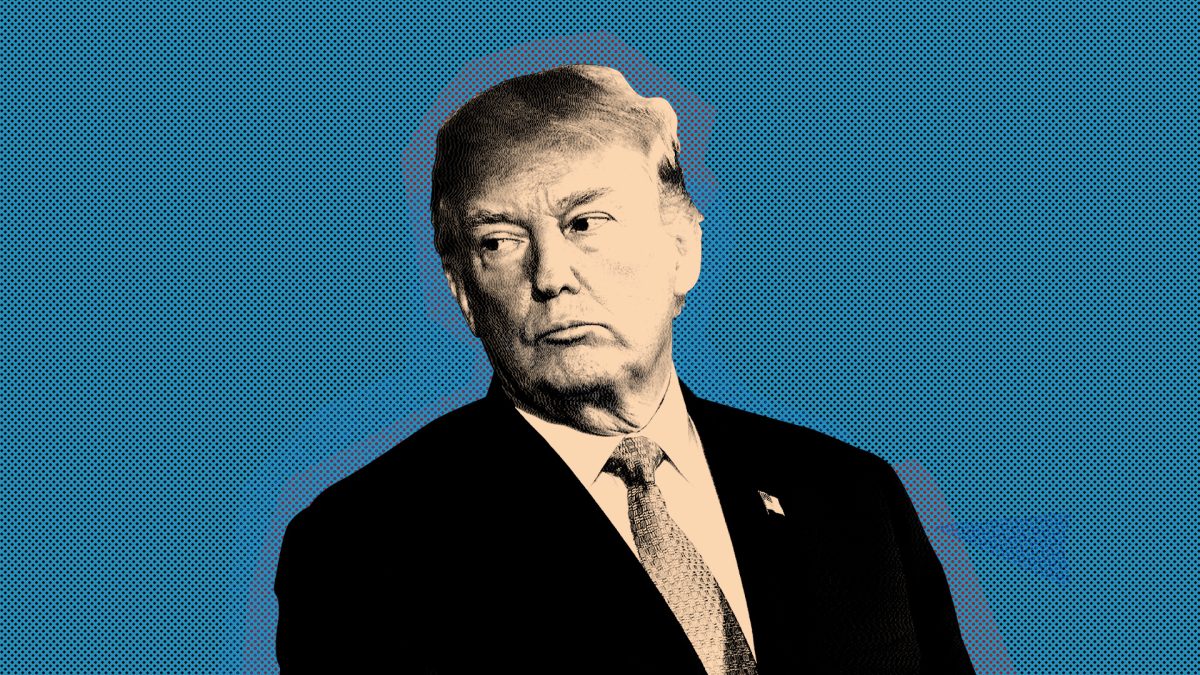
The Senate’s effort to move the Clarity Act forward encountered a fresh obstacle after a preliminary vote fell short. The setback was not simply a routine procedural loss: it placed President Trump’s crypto wealth at the center of a broader debate over whether digital-asset legislation can command durable support when questions about potential conflicts of interest remain unresolved. For markets, the result signals that the bill’s prospects now depend on its ability to withstand a political credibility test, not just on the technical merits of its proposed framework.
Procedural setback raises questions about momentum
The unsuccessful preliminary vote indicates that supporters have not yet assembled enough Senate backing to carry the legislation through the next stage. It does not constitute a final rejection of the Clarity Act, but it reveals a narrower coalition than proponents would need for passage. With no final vote, the proposal remains exposed to delays, additional negotiations, or another attempt to secure support.
- The bill has not been killed, but its immediate path to enactment has become less certain.
- Opposition is increasingly tied to concerns about the president’s crypto holdings and the appearance of a conflict of interest.
- Supporters may need to address ethics-related objections while rebuilding legislative momentum.
Ethics concerns could outlast the vote
The politics surrounding the Clarity Act extend beyond ordinary disagreements over regulatory design. Critics have used President Trump’s crypto wealth to argue that lawmakers should be wary of endorsing legislation from which the administration could receive disproportionate attention or financial benefit. Whether or not those concerns change individual votes, they complicate the administration’s effort to present the bill as broadly grounded public policy rather than a measure shaped by concentrated market interests.
This dispute could influence lawmakers who otherwise favor clearer rules for digital assets. A bill intended to reduce regulatory uncertainty may itself create uncertainty if its political sponsorship remains controversial. That dynamic is particularly important in Washington, where crypto legislation must often combine industry support, bipartisan appeal, and confidence that its benefits are not narrowly tailored to insiders.
Market impact: caution over a structural solution
Bitcoin and Ethereum were not directly affected by the vote, but both can serve as sentiment indicators for the wider crypto market. A legislative stumble may weigh on short-term risk appetite, especially among investors who had priced in faster US regulatory clarity. Altcoins are likely to be more sensitive because they tend to react strongly to changes in liquidity expectations and regulatory sentiment.
The market reaction should not be interpreted as a permanent bearish verdict on digital assets. The Clarity Act’s difficulties reflect a political and ethics challenge rather than a failure of the underlying blockchain sector. Nevertheless, delayed legislation can leave companies facing an uneven compliance landscape and investors without the certainty that clearer federal rules would provide. That uncertainty may discourage some institutional participation while leaving speculative trading activity relatively resilient.
Outlook: passage remains possible, but harder
The most likely near-term outcome is further delay rather than definitive defeat. Supporters can return with additional votes, revise the proposal, or seek a broader negotiating platform. However, any successful strategy will probably need to answer ethics-related questions more directly and demonstrate that the legislation serves the market as a whole rather than benefiting a select group of holders.
For the crypto industry, the episode underscores that regulatory progress in the United States is increasingly tied to political trust. A technically complete bill may still struggle if lawmakers and investors perceive a conflict around its creation. If the Clarity Act is revived and strengthened, it could eventually provide a meaningful framework for digital-asset markets. Until then, its stalled progress is likely to preserve uncertainty and keep US crypto policy in a period of cautious limbo.
Market context
Market data reflects conditions at publication time and is not updated in real time.
Data captured at: Sep 16, 2026 23:10 (Tehran)
Likely market impact
| Segment | Outlook |
|---|---|
| Bitcoin | ● Neutral |
| Ethereum | ● Neutral |
| Altcoins | ● Neutral |
| Short term | ▼ Negative |
| Long term | ● Neutral |
Spot prices at publication
Fear & Greed Index
Chart
Source: The Block